
IRATA Certification Explained: Levels, Costs, and Career Path
Complete guide to IRATA certification — what each level means, training costs, how to progress, and whether IRATA or SPRAT is right for you. Written by industry professionals.
IRATA certification is your entry ticket to the rope access industry. But what exactly is it? How much does it cost? And how do the levels work?
If you're researching rope access as a career, or you're already Level 1 and wondering about progression, this guide covers everything you need to know.
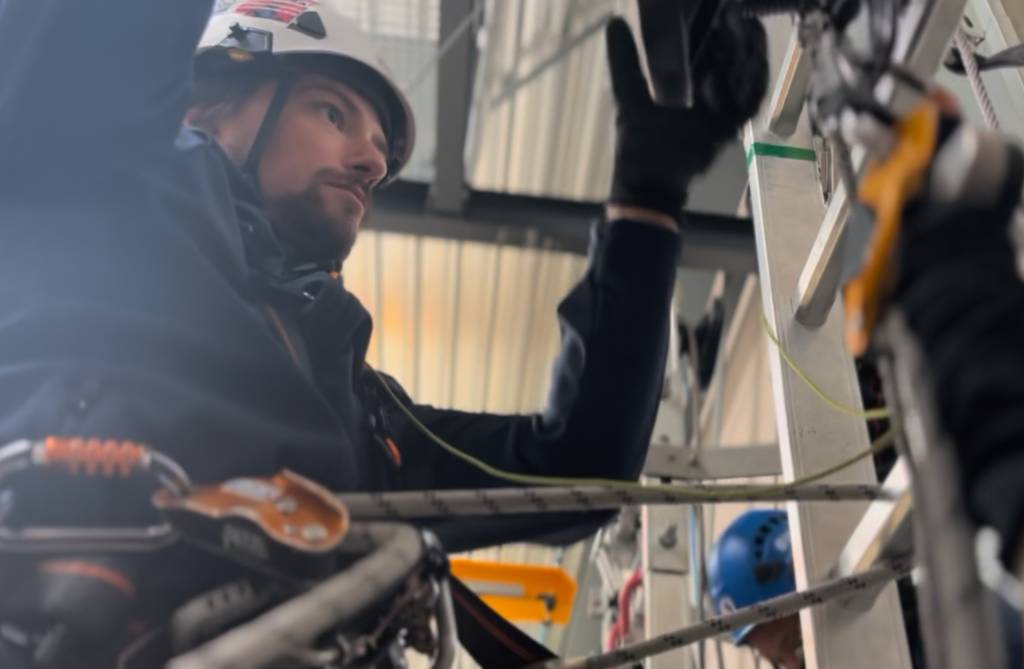
What is IRATA?
IRATA stands for Industrial Rope Access Trade Association. Founded in the UK in 1987, it's now the dominant rope access certification body worldwide — especially in Europe, the Middle East, Asia, and Australia.
When someone says they're "IRATA certified," they mean they've completed training and assessment through an IRATA-approved training center and hold a valid IRATA certification card.
Why IRATA Matters:
- Recognized internationally (over 50 countries)
- Required by most major employers and projects
- Sets the global standard for safety and competence
- Opens doors to work worldwide
Without IRATA (or SPRAT in North America), you simply can't work in professional rope access. It's not optional — it's the foundation.
The Three IRATA Levels
IRATA uses a three-level progression system. Each level has specific requirements and unlocks different work opportunities.
Level 1: Rope Access Technician
What it is: Your entry point. Level 1 certifies that you can work safely at height under supervision.
- Minimum age: 18 years
- Complete 4-5 day training course
- Pass written exam (multiple choice)
- Pass practical assessment
- Medical fitness (self-declaration or medical form depending on company)
- Work at height under Level 3 supervision
- Perform basic rope access tasks
- Assist with rigging and equipment handling
- Support more experienced technicians
- Work unsupervised on complex tasks
- Set up rope access systems independently
- Supervise other technicians
Typical Day Rates: €150-250 onshore, €250-350 offshore
The Reality: Level 1 is about learning. Your first year, you'll do a lot of support work — carrying equipment, assisting with setups, basic tasks. That's normal. Everyone starts here.
Level 2: Rope Access Technician
What it is: Level 2 means you can work independently. This is where most technicians spend the bulk of their career.
- Hold valid Level 1 for at least 12 months
- Log minimum 1,000 hours of rope access work
- Complete Level 2 training course (typically 5 days)
- Pass written exam
- Pass practical assessment
- Work independently on most rope access tasks
- Make technical decisions within your scope
- Assist Level 3s with complex rigging
- Perform rescues
- Supervise work sites independently
- Sign off on safety documentation
- Run teams without Level 3 oversight
Typical Day Rates: €200-350 onshore, €300-450 offshore
The Reality: The Level 1 to Level 2 jump is significant. Rates increase 30-50%, you get more interesting work, and you're treated as a capable professional rather than a trainee. Getting here is worth the effort.
Level 3: Rope Access Safety Supervisor
What it is: Level 3 is the supervisor qualification. You can run work sites, set up systems, and take responsibility for safety.
- Hold valid Level 2 for at least 12 months
- Log minimum 3,000 total hours of rope access work
- Complete Level 3 training course (typically 5 days)
- Pass written exam
- Pass practical assessment (more rigorous)
- Supervise rope access operations
- Set up and inspect rope access systems
- Write method statements and risk assessments
- Sign safety documentation
- Train and mentor junior technicians
- Full rescue capability
Typical Day Rates: €300-500 onshore, €400-600+ offshore
The Reality: Level 3 is management. You're responsible for safety, paperwork, and team performance. Some technicians love this; others prefer staying at Level 2 and focusing on technical work. Both are valid career paths.
Training and Assessment: What to Expect
Level 1 Training Course
Duration: 4-5 days
- Equipment familiarization (harness, descender, ascenders, etc.)
- Basic rope access techniques
- Ascending and descending
- Aid climbing
- Changeovers (switching between ascending and descending)
- Knots and anchor systems
- Basic rescue techniques
- Fall protection principles
- Documentation and logbook use
Assessment Components:
- 40 multiple choice questions
- 70% pass mark
- Covers theory, safety, and procedures
- Observed by IRATA assessor
- Perform techniques under timed conditions
- Demonstrate rescue capability
- Show equipment knowledge
Pass Rate: Around 90% for Level 1. Most people pass if they stay focused during training.
Level 2 Training Course
Duration: 5 days
- Advanced rigging techniques
- Complex rope systems
- Hauling and lowering
- Deviation and reanchor techniques
- Advanced rescue scenarios
- Problem-solving at height
- More demanding written exam
- Complex practical scenarios
- Higher standard expected
The Level 2 course builds on everything you learned at Level 1. The assumption is you've been working and have real experience to draw on.
Level 3 Training Course
Duration: 5 days
- Safety supervision responsibilities
- Risk assessment and method statement writing
- Complex rigging system design
- Emergency planning
- Team management
- Documentation requirements
- Legal responsibilities
- Comprehensive written exam
- Practical supervision scenarios
- Rescue management
- Documentation exercises
Level 3 assessment is significantly harder. You're being certified to take legal responsibility for work sites. The standard reflects that.
Certification Costs
Here's what you can expect to pay for IRATA training:
| Level | Typical Cost | Includes |
|---|---|---|
| Level 1 | €1,500-2,500 | Training, assessment, certification card |
| Level 2 | €1,500-2,500 | Training, re-assessment |
| Level 3 | €1,500-2,800 | Training, full re-assessment |
- Country (UK and Netherlands tend to be competitive; remote locations cost more)
- Training center reputation
- Included extras (accommodation, equipment hire)
- Group discounts
- Travel and accommodation during training
- Lost earnings during training days
- Re-certification every 3 years
For Level 1, budget €2,000-3,000 total including all costs. It's a real investment, but one that pays back quickly once you start working.
Certification Validity and Re-certification
IRATA certifications are valid for 3 years. Before expiry, you must:
- Demonstrate continued activity (logbook evidence of work)
- Complete re-assessment or re-validation
Re-validation Options:
- Log at least 750 hours in the 3-year period
- Complete Level 1 assessment again
- No training course required (just assessment)
If you haven't been active enough, you may need to complete full retraining. Keep working and logging hours to avoid this.
Lapsed Certification:
Let your cert expire without renewal and you're back to zero. You'll need to retrain from Level 1 if you want to return. Don't let this happen — set calendar reminders well before expiry.
IRATA vs. SPRAT: Which Should You Choose?
The rope access world has two main certification bodies:
| Factor | IRATA | SPRAT |
|---|---|---|
| Global recognition | Very high | North America focused |
| Where it's preferred | Europe, UK, Middle East, Asia, Australia | USA, Canada |
| Members worldwide | 30,000+ | 6,000+ |
| Reciprocity | Some, with verification | Some, with verification |
General Guidance:
- Planning to work internationally? → IRATA
- Based in North America, staying there? → SPRAT
- Want maximum flexibility? → IRATA, possibly add SPRAT later
Many companies accept both, but regional preferences exist. In the North Sea, IRATA is standard. In the Gulf of Mexico, SPRAT is more common.
Some technicians hold both certifications to maximize opportunities. If you already have one, adding the other usually involves a bridging assessment rather than full retraining.
Choosing a Training Center
Your training center choice matters — not just for the quality of instruction, but for your early career networking.
What to Look For:
✓ IRATA approved (check the IRATA website member list) ✓ Experienced instructors with industry backgrounds ✓ Good instructor-to-student ratio (1:6 or better) ✓ Modern, well-maintained equipment ✓ Realistic training structures ✓ Positive reviews from past students ✓ Job placement support or industry connections
Red Flags:
✗ Not on the IRATA approved list ✗ Unusually cheap (cutting corners somewhere) ✗ No verifiable reviews or references ✗ Pressure tactics to sign up immediately
Some training centers have strong relationships with employers and can help graduates find their first jobs. This networking aspect can be worth a higher price tag.
Building Your Hours: The Path to Progression
The biggest challenge after Level 1: logging enough hours to progress.
Hours Required:
- Level 1 → Level 2: 1,000 hours (minimum 12 months)
- Level 2 → Level 3: 3,000 hours total (minimum 12 months at Level 2)
Tracking Requirements:
Your IRATA logbook is your career record. For each job, document:
- Dates worked
- Hours worked
- Description of tasks
- Site/project name
- Supervisor signature (Level 3)
This isn't bureaucracy — it's your evidence for progression. Take it seriously.
Hour-Building Tips:
- Take work even if the rate isn't perfect (experience matters early on)
- Build relationships with Level 3 supervisors who will sign off your hours
- Be flexible about locations and project types
- Keep your logbook updated after every job — don't let entries pile up
- Join a platform like Rope Access Network to increase your visibility and find opportunities
The technicians who progress fastest are the ones who hustle for work and never miss an opportunity to log hours.
Combining IRATA with Additional Certifications
IRATA is your foundation, but stacking additional certifications makes you more valuable:
- GWO (wind energy) — increasingly important
- BOSIET/HUET (offshore survival)
- MIST (UK offshore)
- Offshore medical certificate
- Welding qualifications
- NDT (UT, MT, PT, VT)
- Painting and coating
- Rigging
- First Aid
- Manual Handling
- CSCS (UK) / VCA (Netherlands)
The more boxes you can tick, the more projects you qualify for. Build your certification stack strategically based on the sector you want to work in.
Your IRATA Journey: Summary
- Research training centers in your area
- Budget for full costs (training + travel + time)
- Complete Level 1 training and assessment
- Add supporting certifications relevant to your target sector
- Find work proactively (agencies, direct applications, networking)
- Log hours diligently
- Build your professional reputation
- Create your profile on Rope Access Network to improve visibility
- Reach 1,000 hours and 12 months experience
- Complete Level 2 training and assessment
- Continue building hours toward Level 3 if desired
- Add trade skills to increase earning potential
The path is clear. It takes effort, but the career waiting on the other side is worth it.
Ready to Get Certified?
If you're serious about rope access, your next step is finding a good training center and booking your Level 1 course.
Already certified? Join Rope Access Network and create your professional profile. List your IRATA level, your additional certifications, and make yourself discoverable to employers worldwide.
We're building the network this industry needs. Come climb with us.
Questions about IRATA certification or training centers? Reach out — we're happy to point you in the right direction.
Ready to Start Your Rope Access Career?
Join thousands of certified technicians on Rope Access Network. Create your professional profile, showcase your certifications, and connect with leading companies in the industry.