
Offshore Rope Access: Breaking Into Oil, Gas & Wind Energy
Everything you need to know about offshore rope access work — from required certifications to day rates, what the work is actually like, and how to get your first offshore job.
Offshore rope access is where the money is. Day rates are 30-60% higher than onshore, and the projects — oil platforms, wind turbines, remote installations — have a certain appeal that office work can't match.
But getting into offshore work isn't as simple as wanting it. There are certifications to stack, lifestyles to adapt to, and competition to navigate. This guide covers what you actually need to know.
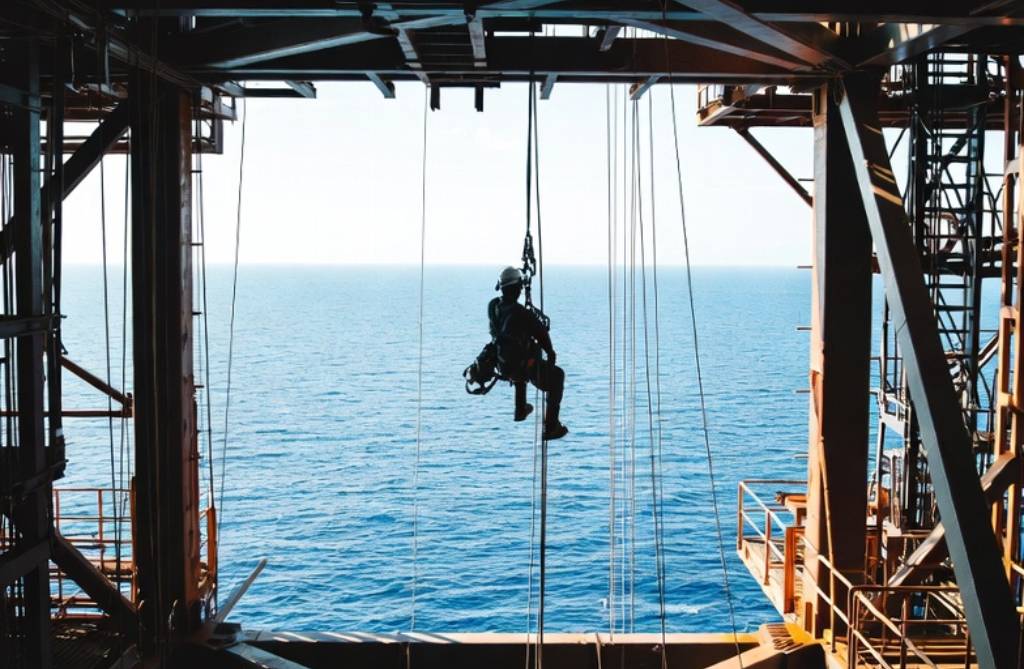
What "Offshore" Means in Rope Access
When technicians talk about "offshore," they typically mean work on structures in open water:
- Oil and gas platforms — Production platforms, drilling rigs, FPSOs
- Wind turbines — Offshore wind farms in North Sea, Irish Sea, and beyond
- Subsea installations — Accessed from vessels
- Jack-up rigs and barges — Mobile offshore units
- Transition pieces and substations — Wind farm infrastructure
The work varies by sector, but the common thread: you're away from land, often for weeks at a time, in conditions that can be demanding.
Why Offshore Pays More
Higher rates aren't arbitrary. Companies pay premiums because:
The Environment Is Demanding
- Weather exposure (wind, rain, cold)
- Confined working conditions
- Limited rest and recreation
- Isolation from normal life
- Higher inherent risk
The Commitment Is Real
- 2 weeks on / 2 weeks off
- 3 weeks on / 3 weeks off
- Sometimes 4 weeks on / 4 weeks off
You're living on the platform or vessel for your rotation. That's different from going home at the end of a workday.
Certification Requirements Are Higher
Getting offshore-ready costs money and time. Employers compensate for that investment.
Flexibility Requirements
Projects can start at short notice. Weather windows open and close. You need to be available, sometimes with limited warning.
Offshore Sectors: Oil/Gas vs. Wind
The two main offshore sectors for rope access have different characteristics.
Oil and Gas
What the Work Involves:
- Structural inspections
- Coating and painting
- NDT (non-destructive testing)
- Maintenance and repair
- Decommissioning work (increasingly common)
Market Characteristics:
- Mature market with established players
- Significant work in North Sea, Gulf of Mexico, Middle East, Australia
- Decommissioning creating ongoing demand even as new drilling slows in some regions
- Generally higher barriers to entry
Typical Rates (North Sea):
| Level | Day Rate |
|---|---|
| Level 1 | £280-350 |
| Level 2 | £350-450 |
| Level 3 | £450-600 |
Add NDT or specialized skills and rates go higher.
Offshore Wind
What the Work Involves:
- Blade inspection and repair
- Tower maintenance
- Transition piece work
- Painting and coating
- Cable and electrical access
Market Characteristics:
- Growth sector — massive investment across Europe and increasingly globally
- Newer technicians often find wind more accessible than oil/gas
- GWO certification is the gateway
- Work concentrated in North Sea, Baltic, Irish Sea, with expansion planned
Typical Rates:
| Level | Day Rate |
|---|---|
| Level 1 | €280-350 |
| Level 2 | €350-450 |
| Level 3 | €450-550 |
Wind energy is often the more accessible entry point for technicians new to offshore work.
Certifications You Need
This is where offshore gets expensive. Beyond your IRATA certification, you need additional safety training.
For All Offshore Work
BOSIET (Basic Offshore Safety Induction and Emergency Training)
- Helicopter underwater escape training
- Sea survival
- Fire awareness
- First aid elements
Cost: £800-1,200 Validity: 4 years Requirement: Mandatory for nearly all offshore work
CA-EBS (Compressed Air Emergency Breathing System)
Often bundled with BOSIET or required separately.
Offshore Medical Certificate
You need to prove you're fit to work offshore. In the UK, this is the OGUK medical. Other regions have equivalents.
Cost: £100-200 Validity: 2 years (may vary)
For UK Offshore
MIST (Minimum Industry Safety Training)
UK-specific induction required by most operators.
Cost: Varies Validity: 4 years
For Wind Energy
GWO Basic Safety Training
- Working at Heights
- First Aid
- Fire Awareness
- Sea Survival
- Manual Handling
Cost: €1,500-2,500 for the full package Validity: 2 years (most modules)
Enhanced GWO/Hub Rescue
- Advanced rescue training
- Hub rescue specific to wind turbines
Blade Repair Training
For those specializing in blade work — composite repair qualifications add significant value.
Total Investment
Getting fully offshore-ready can cost €3,000-5,000 beyond your initial IRATA certification. Budget for it. The rates compensate, but you need cash flow to get there.
What Offshore Life Is Actually Like
Let's be honest about what you're signing up for.
The Schedule
Typical Rotations:
- 2 weeks on / 2 weeks off (most common)
- 3 weeks on / 3 weeks off
- 14 days on / 14 days off is standard, but varies by client and region
- 12-hour shifts are common
- 7 days per week
- Limited personal time
- Living in shared cabins
- Completely free (no obligations)
- Time to recover, handle personal life, or take other work
- Many technicians appreciate the extended breaks
Living Conditions
Varies by installation:
- Single or shared cabins
- Decent food
- Gym facilities on some
- Internet access (varies)
- More basic accommodation
- Shared facilities
- Less comfortable but functional
The Work Environment
- Weather exposure (you'll work in cold, wind, rain)
- Early starts and long days
- Physically demanding
- Tight safety protocols
- Limited downtime during shifts
The Psychological Side
Offshore isn't for everyone. Consider:
- Time away from family and friends
- Missing events at home
- Adjustment between work mode and home mode
- The isolation can affect some people
- Routine and structure versus variety
Some technicians love offshore — the focused work, the camaraderie, the weeks off. Others find it challenging after a while. Know yourself.
How to Get Your First Offshore Job
Build Onshore Experience First
Most offshore clients want technicians with solid experience. Coming straight from Level 1 training to an offshore platform is rare.
Typical Path:
- Get IRATA Level 1
- Work onshore for 6-12 months (or more)
- Build hours toward Level 2
- Stack offshore certifications
- Target offshore work as Level 1 (with experience) or Level 2
Some technicians go offshore as experienced Level 1s; most find it easier after reaching Level 2.
Stack the Right Certifications
Before you start applying:
- IRATA (Level 1 minimum, Level 2 better)
- BOSIET (current, not expired)
- Offshore medical (current)
- MIST (for UK work)
- GWO (for wind work)
- First Aid (current)
Expired certifications = no work. Keep them current.
Target the Right Companies
Offshore work flows through:
Direct Employers
Large rope access contractors with offshore contracts. Apply directly, demonstrate your certifications and experience.
Staffing Agencies
Many offshore contracts run through agencies. Register, submit your certs, be available when they call. Agencies that specialize in offshore work are your best bet.
Networking
Who do you know who works offshore? Every connection helps. Be proactive about building relationships.
Make Yourself Discoverable
Create your profile on Rope Access Network. List all your certifications, show your offshore readiness, indicate your availability. When employers search for offshore technicians, you want to appear.
Be Flexible and Available
Offshore work can come at short notice. Weather windows, project changes, someone dropping out — opportunities appear. Being available and willing to mobilize quickly gets you work.
Adding Value: Trade Skills That Increase Offshore Rates
Basic rope access gets you to the platform. Additional skills increase what you earn there.
High-Value Offshore Skills:
| Skill | Rate Premium | Notes |
|---|---|---|
| NDT (UT, MT, PT) | +20-40% | Inspection work is always needed |
| Welding (coded) | +15-30% | Structural work, repairs |
| Coating Inspection | +15-25% | Pairs well with rope access |
| Blade Repair | +20-35% | Wind energy specialty |
| Rigging (advanced) | +10-20% | Complex lifting operations |
A Level 2 with coded welding qualifications can earn Level 3 rates or higher. Consider your long-term skill development.
Regional Offshore Hotspots
North Sea (UK, Norway, Netherlands)
- Oil and gas (mature but ongoing)
- Offshore wind (growing rapidly)
- Strong safety standards
- Good rates
Base yourself in Aberdeen, Stavanger, or Netherlands to access this market.
Gulf of Mexico
- Oil and gas focused
- SPRAT territory (though IRATA also accepted)
- Strong American and international contractor presence
Middle East
- Offshore oil and gas
- Often platform-based for extended periods
- Tax-free earnings (in some cases)
Australia
- Offshore oil and gas
- Some distance from projects requires longer rotations
- High rates to compensate
Southeast Asia
- Oil and gas
- Growing market
- Variable standards by client
Realistic Expectations: Year One Offshore
If you're making the move to offshore, here's what year one might look like:
- BOSIET: £1,000
- Medical: £150
- GWO (if wind): €2,000
- Travel to training: variable
- Time off work during training
- 3-4 rotations in your first year is realistic
- Maybe 60-80 working days offshore if you're starting out
- Day rate €350-400 as Level 2
- Gross: €21,000-32,000 from offshore alone
- Onshore work between rotations
- Building toward more consistent offshore bookings
Year two gets better as you build relationships and your reputation.
Is Offshore Right for You?
Be honest with yourself.
- You can handle time away from home
- You thrive in structured environments
- You're comfortable with physical work in challenging conditions
- You manage money well (feast or famine income patterns)
- You value intensive work periods followed by extended breaks
- You need daily contact with family
- You struggle with routine and confined spaces
- You have commitments that require regular availability
- You prefer variety over intensity
- You don't handle isolation well
There's no shame in preferring onshore work. Many excellent technicians focus there exclusively.
Summary: Breaking In
The path to offshore work:
- Build solid onshore experience first
- Invest in offshore certifications (BOSIET, medical, GWO if wind)
- Keep all certs current
- Apply to agencies and companies with offshore contracts
- Network actively
- Build your professional profile so you're discoverable
- Be available and flexible when opportunities come
- Develop trade skills over time to increase rates
Offshore work is rewarding — financially and professionally. It takes investment to get there, but for the right person, it's worth it.
Ready to go offshore? Join Rope Access Network and show employers you're offshore-ready. List your certifications, your experience, and your availability. Let opportunities find you.
Ready to Start Your Rope Access Career?
Join thousands of certified technicians on Rope Access Network. Create your professional profile, showcase your certifications, and connect with leading companies in the industry.