
Trade Skills That Boost Your Rope Access Day Rate
Which additional skills increase your rope access earnings? A practical breakdown of trade qualifications, what they cost, and how much they can add to your day rate.
Your IRATA certification gets you to the work site. What you can do when you get there determines what you earn.
The highest-paid rope access technicians aren't just climbers — they're welders, inspectors, painters, and specialists who happen to access their work via ropes. Adding trade skills to your profile can increase your day rate by 20-40%, sometimes more.
This guide breaks down which skills are worth the investment and what return you can expect.
Why Trade Skills Matter
Let's be direct about the economics.
- Rigging support
- General access tasks
- Holding equipment for others
- Basic cleaning and maintenance
This work is needed, but it's also what most Level 1s and many Level 2s can do. Supply is higher, so rates are lower.
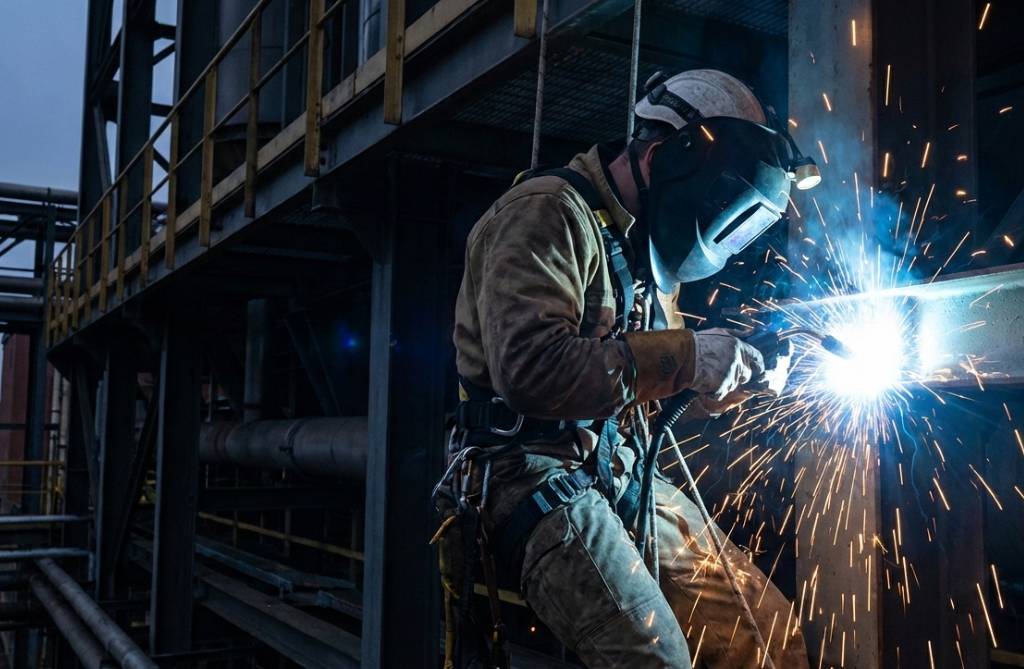
- Welding at height
- NDT inspections
- Technical coating applications
- Blade repair
- Complex rigging
Fewer technicians can do this. Supply is lower, so rates are higher.
Simple economics: be able to do what fewer people can do.
The Highest-Value Trade Skills
Based on industry demand and rate premiums, here are the skills worth considering:
1. Welding
What It Is: Joining metal using various welding processes — MMA (stick), TIG, MIG, flux-cored.
- Structural repairs on platforms, bridges, industrial structures
- Essential for offshore maintenance
- Permanent skill that translates across industries
- Combines well with rope access for hard-to-reach locations
Typical Rate Premium: +15-30% over non-welding rope access work
A Level 2 earning €300/day might earn €350-400/day with coded welding qualifications on appropriate projects.
- Basic welding course (introduction)
- Coded welder certification (e.g., EN ISO 9606-1)
- Different processes and positions as you develop
- Basic course: €1,000-2,000
- Coded certification: €500-1,500 per procedure/position
- Time: Several weeks to months depending on intensity
Best For: Technicians interested in heavy industrial work, offshore oil and gas, structural maintenance.
2. NDT (Non-Destructive Testing)
- UT (Ultrasonic Testing)
- MT (Magnetic Testing)
- PT (Penetrant Testing)
- VT (Visual Testing)
- RT (Radiographic Testing)
- Essential for structural integrity verification
- Required for safety-critical inspections
- Constant demand in offshore, industrial, infrastructure
- Can work with multiple clients and industries
Typical Rate Premium: +20-40% over general rope access work
NDT-qualified rope access technicians are specialists. A Level 2 with UT certification might earn €400-450/day on inspection projects.
- Individual NDT method certifications (Level 1, Level 2, Level 3)
- Issued by certification bodies (e.g., PCN, ASNT)
- Each method is separate certification
- Level 2 in a method means you can work independently
- Training per method: €2,000-4,000
- Certification exams: €300-500
- Time: 1-2 weeks per method (training) plus study and experience
Best For: Technicians who enjoy precision work, problem-solving, and inspection rather than manual labor. Good career longevity as physical demands are lower than heavy trade work.
3. Painting and Coating
- Abrasive blasting
- High-pressure water jetting
- Spray application
- Brush and roller work
- Constant demand (corrosion protection is ongoing)
- Large portion of offshore and industrial maintenance
- Relatively accessible entry point
- Combines naturally with rope access
Typical Rate Premium: +10-20% for general coating work, higher for specialist applications
- Coating applicator training (various providers)
- NACE/SSPC certifications for inspection roles
- Specific product certifications (some manufacturers require)
- Basic training: €1,000-2,000
- Inspection certification (NACE CIP): €2,000-3,000
- Time: Days to weeks depending on depth
Best For: Technicians who want steady work in industrial maintenance without the complexity of welding or NDT.
4. Rigging
What It Is: Moving loads safely — calculating weights, selecting equipment, setting up lifting operations, signaling crane operators.
- Essential for many rope access operations
- Advanced rigging is specialized knowledge
- Reduces reliance on others
- Natural progression for experienced technicians
Typical Rate Premium: +10-20% for advanced rigging capability
- Basic rigging training
- Advanced rigging qualifications
- Slinger/signaller certifications
- LEEA or equivalent for critical applications
- Training: €500-1,500
- Time: 1-5 days depending on level
Best For: All technicians benefit from rigging knowledge. Advanced rigging is particularly valuable for Level 3s supervising complex operations.
5. Blade Repair (Wind Energy)
What It Is: Repair of wind turbine blades — composite/fiberglass work, leading edge protection, erosion damage repair.
- Wind energy is a growth sector
- Specialized skill with fewer qualified technicians
- Higher rates than general wind maintenance
- Combines with GWO and rope access
Typical Rate Premium: +20-35% over general wind rope access work
Blade repair technicians can earn €400-500/day or more.
- GWO certification first (for wind access)
- Blade repair training (manufacturer or specialist provider)
- Composite repair qualifications
- Blade repair training: €2,000-5,000
- Time: 1-2 weeks typical
Best For: Technicians targeting the wind energy sector who want to specialize rather than generalize.
6. Electrical Work
What It Is: Working with electrical systems — installations, maintenance, fault-finding.
- Many projects have electrical components
- Reduces need for separate electrical trades
- Valuable in wind energy (turbine electrical systems)
Typical Rate Premium: +15-25% where electrical skills are utilized
- Electrical qualifications vary by country
- Often requires formal apprenticeship or training
- Shorter courses available for specific applications
- Highly variable depending on existing background
- Could be years (full qualification) or weeks (specific applications)
Best For: Technicians with existing electrical background looking to combine with rope access, or those willing to invest in longer-term training.
Choosing Which Skills to Develop
Not every skill makes sense for every technician. Consider:
Your Target Sector
Offshore Oil & Gas: → Welding, NDT, painting/coating are the big three
Offshore Wind: → GWO first, then blade repair or painting
Industrial Maintenance: → Welding, painting, rigging
Construction: → General skills plus project-specific needs
Inspection Services: → NDT is king
Match your skill development to where you want to work.
Your Aptitudes
Be honest about what you're good at:
- Enjoy precision work? → NDT might suit you
- Like physical, hands-on work? → Welding or painting
- Patient with technical detail? → Blade repair
- Comfortable with responsibility? → Advanced rigging
Playing to your strengths makes training easier and work more enjoyable.
The Investment Math
Calculate the return:
Example: NDT UT Certification
- Training: €3,000
- Certification: €500
- Time off work: 2 weeks (€3,000-4,000 in lost earnings if working)
- Total: ~€6,500-7,500
- Rate increase: €100/day on NDT projects
- Working 80 NDT days per year = €8,000 extra
- Pays back in first year
The math usually works if you're targeting the right skill for your market.
Certification Stacking
Some combinations work particularly well:
Inspector Profile: IRATA + NDT (UT, MT) + Coating Inspection → High-value, lower physical demand, good career longevity
Industrial Generalist: IRATA + Welding + Painting + Rigging → Flexible, always in demand, can handle most projects
Wind Specialist: IRATA + GWO + Blade Repair → Focused on growth sector, premium rates
Offshore All-Rounder: IRATA + BOSIET + Welding + Painting → Can work most offshore projects
Build your stack strategically rather than randomly.
How to Get These Skills
Formal Training Routes
Most trade skills have established training paths:
- Welding: Technical colleges, specialized welding schools
- NDT: NDT training providers (many offer intensive courses)
- Painting: Coating application schools, manufacturer training
- Blade Repair: Specialist wind training providers
- Rigging: Lifting equipment training centers
Research providers in your region. Look for ones with industry connections and job placement support.
On-the-Job Learning
Some skills can be partially developed while working:
- Shadow experienced technicians
- Ask to be involved in specialized work
- Express interest to supervisors
- Take opportunities when offered
This builds practical experience to complement formal training.
Certification vs. Experience
Important distinction:
Certification: Proves you passed a course and exam Experience: Proves you can actually do the work
Both matter. Certification opens doors; experience keeps them open.
Don't expect to command top rates immediately after training. Build experience, prove yourself, and rates follow.
Showcasing Your Skills
Trade skills only help if employers know you have them.
Update Your Profile
- All trade certifications
- Expiry dates where applicable
- Relevant experience
- Specific qualifications (coded welder positions, NDT methods, etc.)
Update Your CV
- List qualifications clearly
- Include certification numbers and expiry dates
- Highlight relevant experience
During Applications
- Mention specific trade skills relevant to the project
- Provide certification copies
- Highlight any project experience using those skills
Make it easy for employers to see your value.
Long-Term Career Planning
Think beyond your next certification:
Avoid Skill Obsolescence
- Renew certifications before they expire
- Update training as standards change
- Keep practicing skills you've learned
An expired or rusty certification doesn't help you.
Consider Career Trajectory
Where do you want to be in 5-10 years?
- Technical specialist: Deep expertise in one or two areas
- Versatile generalist: Broad capability across many areas
- Management track: Skills plus leadership and business development
- Training/consulting: Expertise plus teaching ability
Your skill choices should align with your direction.
The Physical Reality
Some skills have different physical demands:
- Welding (awkward positions, heat)
- Heavy rigging
- Coating application (equipment weight)
- NDT inspection
- Supervision
- Training
As careers lengthen, some technicians shift toward lower-demand skills.
Summary: Choosing Your Path
- Welding (+15-30%)
- NDT (+20-40%)
- Blade Repair (+20-35%)
- Coating/Painting (+10-20%)
- Rigging (+10-20%)
- Identify your target sector
- Match skills to that sector's needs
- Consider your aptitudes and interests
- Calculate the investment return
- Build complementary combinations
- Research training options in your region
- Talk to technicians who have the skills you're considering
- Update your Rope Access Network profile as you add skills
- Apply your new skills and build experience
The technicians earning the highest rates aren't lucky — they've invested strategically in skills that the market values. You can do the same.
Ready to showcase your skills? Join Rope Access Network — build your profile, list your certifications and trade skills, and let employers find you.
Ready to Start Your Rope Access Career?
Join thousands of certified technicians on Rope Access Network. Create your professional profile, showcase your certifications, and connect with leading companies in the industry.